
In the manufacturing and distillation of aggressive acids like Hydrofluoric (HF) and Hydrochloric (HCl), heat transfer fluids (HTFs) must provide both high thermal efficiency and robust chemical protection. Antifrogen KF is a specialized potassium formate-based brine designed for industrial refrigeration and low-temperature applications, operating effectively from to . Its high alkalinity and advanced Organic Acid Technology (OAT) inhibitors are critical for neutralizing incidental acid leaks, thereby preventing catastrophic corrosion within the heat transfer circuit and ensuring system longevity.
Key Finding
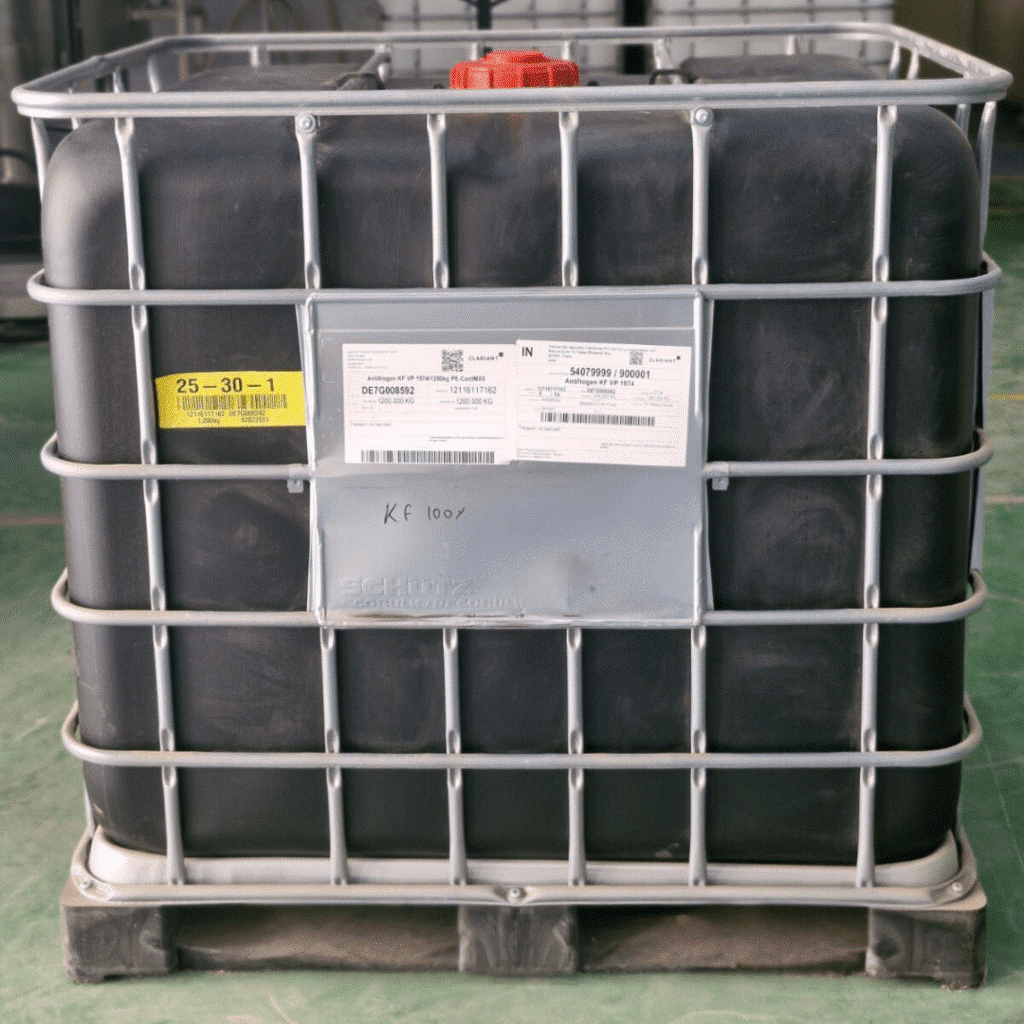
- Antifrogen KF is a non-toxic, low-viscosity liquid primarily used as a high-performance brine in industrial and food refrigeration systems.
- The fluid’s formulation includes a high-capacity pH buffer and corrosion inhibitors that form a microscopic protective film on internal metal surfaces.
- It is engineered to provide permanent protection for cooling and heating systems, even those utilizing a combination of different metals.
- The high alkalinity of the fluid acts as a safety reservoir, neutralizing acidic ingress from potential leaks in HF or HCl heat exchangers.
- Its superior thermophysical properties at sub-zero temperatures result in lower energy consumption for pumping compared to traditional glycol-based fluids.
Details
Background and Context
The distillation and manufacturing of HF and HCl require precise temperature control, often involving sub-zero cooling to manage volatile reactions. In these environments, the risk of “incidental leakage”—where aggressive acid enters the secondary heat transfer loop through a pinhole leak or gasket failure—is a constant threat. Standard heat transfer fluids can turn acidic rapidly, leading to rapid corrosion of the entire piping network. Antifrogen KF addresses this by maintaining a high alkaline reserve that can neutralize small amounts of acid before they damage the system hardware.
Comparison: Potassium Formate vs. Glycols
- Viscosity: At temperatures below , potassium formate (KF) maintains significantly lower viscosity than ethylene or propylene glycol, allowing for higher flow rates and better heat transfer coefficients.
- Safety: Unlike ethylene glycol, Antifrogen KF is non-toxic and suitable for a wider range of industrial environments.
- Protection: While glycols require separate inhibitor packages, Antifrogen KF comes pre-formulated with OAT inhibitors specifically designed for brine environments.
Pros / Cons
- Pros: Excellent low-temperature thermal conductivity, high alkalinity for acid neutralization, and environmentally friendly (non-toxic).
- Cons: Limited upper temperature range () compared to synthetic oils; requires careful monitoring of concentration to maintain frost protection
Caveats / What’s Uncertain
While Antifrogen KF is robust against incidental leaks, it is not a permanent solution for major structural failures in acid reactors. Continuous monitoring of the fluid’s pH and inhibitor levels is required to ensure the alkaline reserve has not been depleted by secret leaks.
Practical Takeaway
- Monitor pH Levels: Regularly test the HTF to ensure the pH remains in the alkaline range, which confirms the inhibitor system is still active against potential acid ingress.
- Check Concentration: Ensure the fluid is diluted to the correct frost-protection level for your specific climate or process requirement (down to ).
- Material Compatibility: Confirm that all gaskets and seals in the circuit are compatible with potassium formate-based fluids to prevent leaks at connection points.
- Leak Detection: Use the high alkalinity of Antifrogen KF as a diagnostic tool; a sudden drop in pH is a primary indicator of a breach in the HF/HCl heat exchanger.